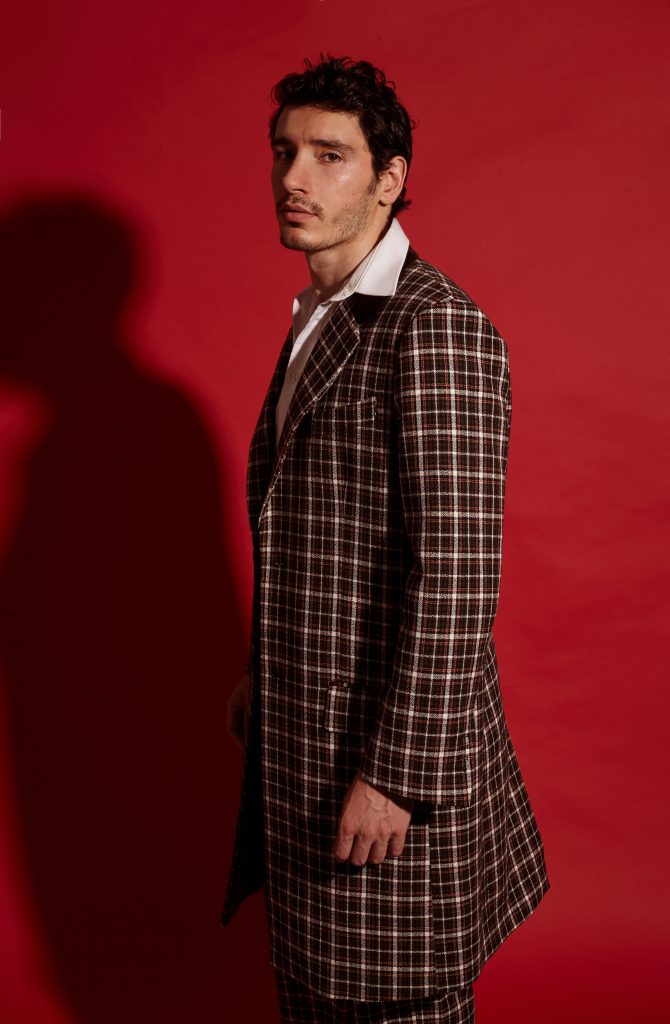
“If you just listen and live in the moment, I think that’s how you get that magic.
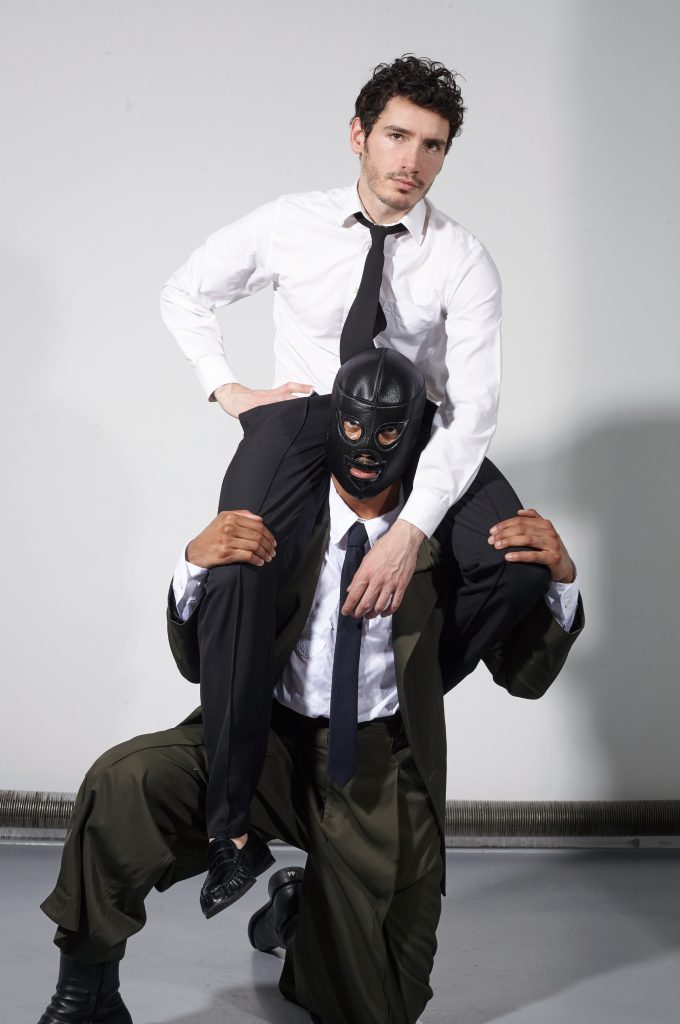
LAITH KHALIFEH in conversation with MURRAY BARTLETT
Laith: Hey Murray! Long time no see!
Murray: Hey! So how are you doing?
Laith: Good! Really busy lately, I’ve been working on two TV projects that I’m really excited about. They came out of nowhere, back to back. After a quiet year and a half of auditioning and auditioning with nothing happening, I’m excited to be working on something new.
Murray: Does it feel like a bit of a flow-on effect from Drunken Noodles?
Laith: Definitely. That was such a special film to be a part of and it was so warmly received. I feel really lucky to have been a part of it and its reception definitely presented me with opportunities to audition for some amazing projects. But it’s been a long year or so auditioning and auditioning. I suppose it’s different for everybody, but I didn’t realize how much of this job is just waiting and hearing nothing at all. Sending auditions into the void it seems at
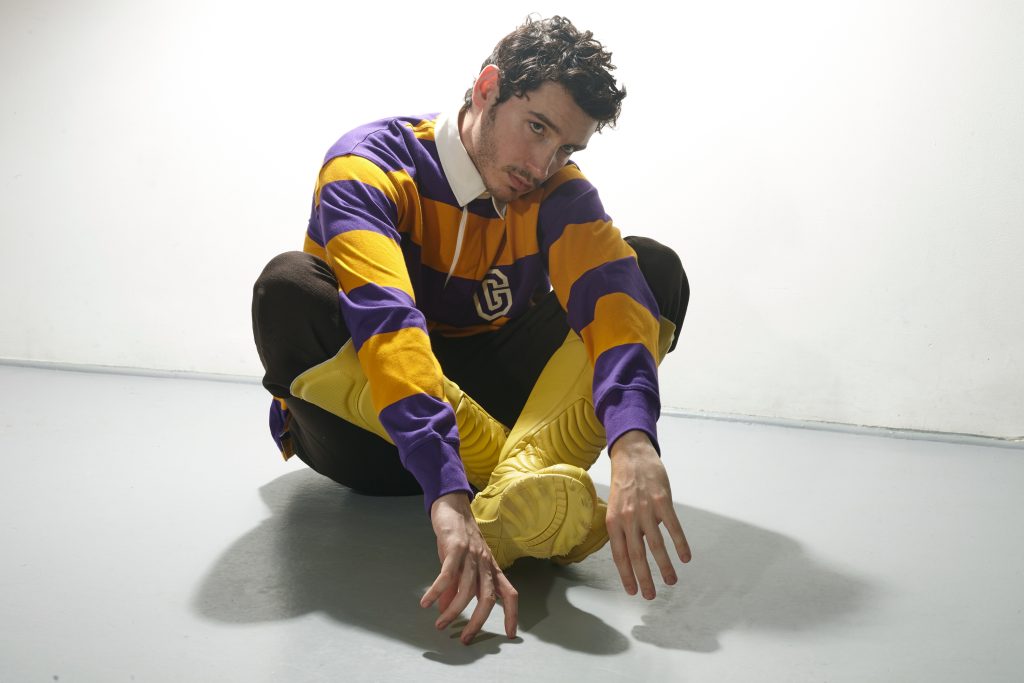
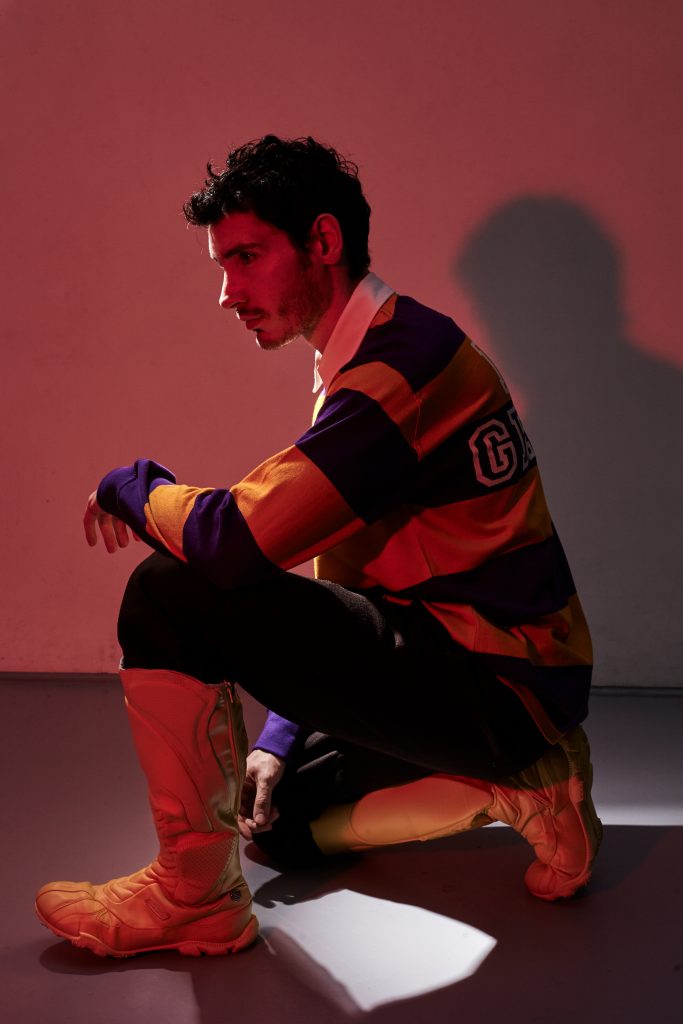

pants and jersey GANT, boots ROMBAUT
Murray: When I first moved to New York, a long time ago, I asked if I could be a reader in auditions. It was amazing because it gave me a completely different perspective, seeing from the other side what works and what doesn’t. Every situation is different and individual, but it was a different view from turning up nervous, going in and leaving. It helped me understand the choices casting people have to make, and how much is out of our control: physical stuff, the way we look, how tall we are. That’s obvious, but being present in so many auditions to see how it plays out was really useful. In some ways it was demoralizing, in some ways inspiring. You think, oh wow, this is tough. But you also witness these magic moments. The rest of an audition might not be outstanding, or the person might not be right, but then there’s one moment where you think, oh, there’s magic. So there are some really inspiring things about it.
Laith: That’s genius.
Murray: I see you’ve got a Genet book there behind you.
Laith: Oh yeah, the biography by Edmund White. I haven’t finished it yet, but I love Genet. As a writer but also as a person, how he transformed his life from a traumatized outcast to a radical political figure and a saint of sorts.
Murray: Have you seen Querelle?
Laith: Yeah! I had a massive Fassbinder phase in college where I was watching everything. It’s an amazing rabbit hole to go down. So rough and raw.
Murray: By what we’d think of as production values, some of the films are kind of cheap, but all the better for it. It makes things feel possible.
Laith: He was also doing tons of drugs and burnt out real quick, but made all of that. I think Querelle was his last film, near the end anyway. Just so inspiring.
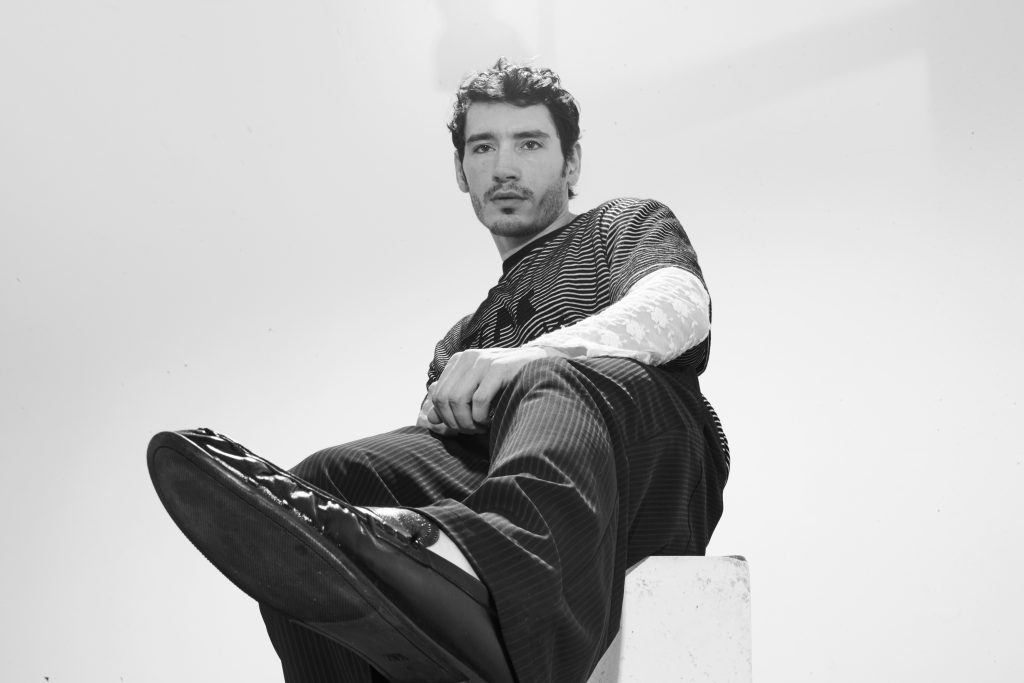
t-shirt and pants SONG FOR THE MUTE, loafers THE ROW
Murray: I’ve just been watching *The American Friend*, by Wim Wenders. I think it’s his breakout film, he took it to Cannes in the 70s. It’s very different from Fassbinder, but there’s some flavor that feels similar, like it’s coming from a similar place. It’s so beautiful and lush. Every shot is gorgeous, it’s got that 70s vibe, the cars are cool, everything looks cool, and it has the kind of noir feel that Fassbinder veers into a lot. Man, I want to do a film like that.
Laith: I know. If only. When I was studying film in college, those were two of my biggest heroes among others. They made stylish films for sure, but there was also a liberation in that way of making. I mean, what they made their films about, especially Fassbinder directly critiquing society and interpersonal relationships in that way. And also the rate at which he made his films in that guerrilla style, it’s insane. I guess the blow helped. And also lower budgets and the public funding Europe was good about providing at the time.
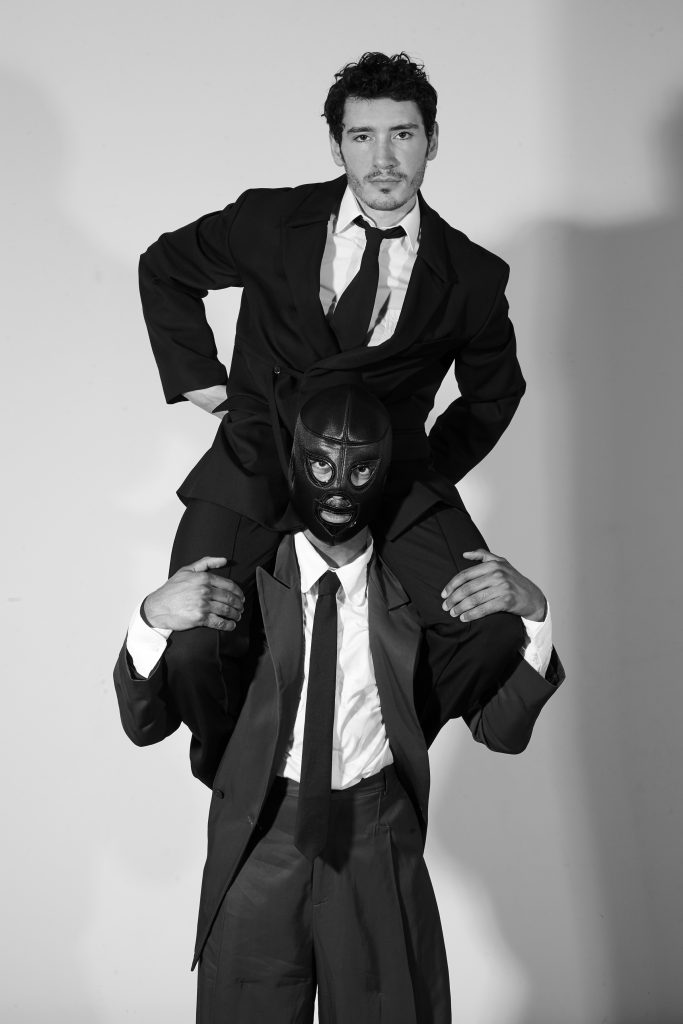
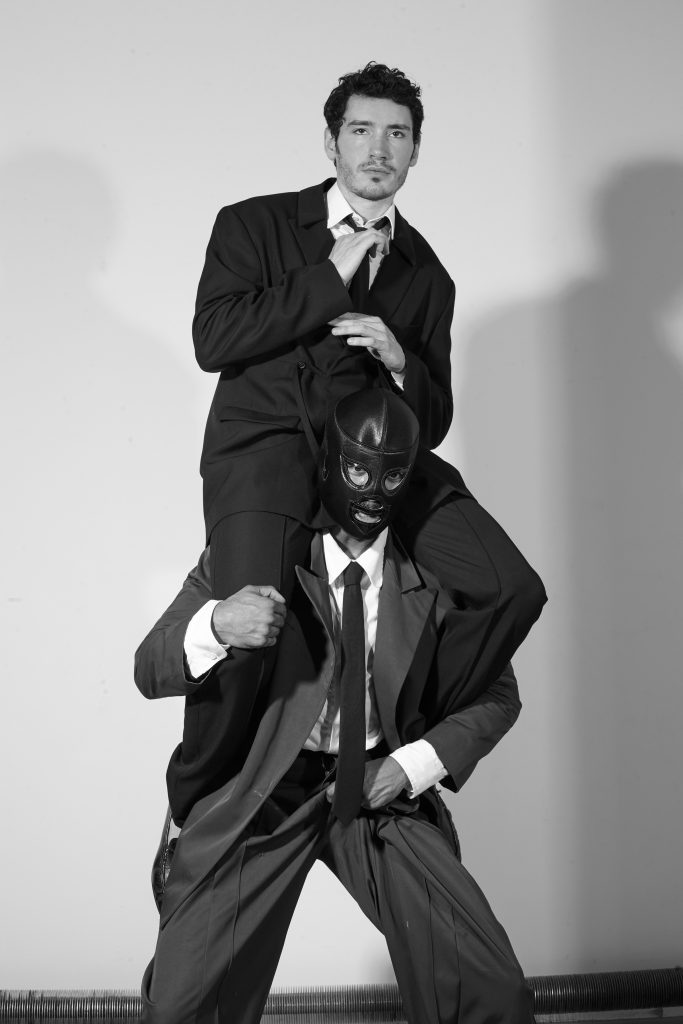

suit LOUIS GABRIEL NOUCHI, loafers THE ROW, shirts 3 PARADIS and LEMAIRE, boots BALANCIAGA, ties are vintage
Murray: That mid-range budget, films that take risks but have enough money that you’re not holding it together with sticky tape, has sort of disappeared in the last five or ten years, maybe more. It’s upsetting, because that’s where a lot of the cool stuff comes from. When you’ve got a bit of money to play with, you can still take risks. And there’s no shortage of great filmmakers in the US who want to make those films. It’s just become more difficult. So is writing and directing still a passion for you?
Laith: Definitely, that’s never going to go away. Everything I do always leads me back there. I studied film in undergrad in a program that leaned more conceptual and theoretical. It was amazing, but I felt like I was lacking a certain language when it came to performance. The reason I stumbled into acting was because I started taking workshops to learn how to communicate with actors and become a better director. Performance has always been such an important part of my conception of cinema. I’m so glad I did that because not only did I discover my own personal love of performance and wanting to do it myself, but I feel like it’s constantly informing how I want to work as a writer and director. When I began to act and pursue it as a career, the thought crossed my mind that they would be separate things existing in their own worlds, but I’ve found they have a symbiotic relationship that’s constantly evolving.
Murray: I think that’s really smart. When I’ve worked with directors who’ve had even a tiny bit of acting experience, having that perspective is really valuable. Some directors have great access to a language actors understand, without having acted. But there’s something about stepping into being an actor that creates a bridge in how you communicate. It’s the same with what you said about studying film theory. You can have clear ideas before you start, but once you’re there and have 70 decisions to make in ten minutes, the putting into action is where it really matters. Not that the vision isn’t important, it is. But I can only speak as an actor: there’s a bitter irony that the more experience you have, the better you get, and starting out you just can’t get experience. So you do classes and all the things to try to get it somehow. But it’s not until you actually implement what you’re learning, do a job and then another job and another, that you get a perspective on how you want to approach things and tackle the challenges that come up. It’s all in the doing.
Laith: I couldn’t agree more. Each experience I have feels like I’ve been shown a whole new world of knowledge.
Murray: I did this film, and this is a bit of a brag, I guess, but I want to tell the story. I did a film with Ellen Burstyn.
Laith: I saw you posting about it! How amazing.
Murray: It was amazing! She was one of the main reasons I wanted to do the film. She’s so epic, and I wanted to learn from her. We were at the Venice Film Festival, where she got a lifetime achievement award, and her whole philosophy is that it’s a continual learning process. She’s living proof. There’s a gravitas to her. She’s anchored in who she is and in all her experience, but she doesn’t pretend to know everything. She’s alive in the moment, still learning. Being in a scene with her is exciting because you don’t know what’s going to happen, which is what you want. She talked about being a young woman in LA who decided she needed to be a serious actor. She moved to New York, got a Broadway job, and thought, well, that wasn’t hard. Then she started watching these amazing actresses she admired and wanted to know how they did it. That set her off on this quest to keep getting better. I find that so inspiring, especially given what we were just talking about: every experience is a chance to learn a little more, even if it doesn’t work out the way you want. You take it forward. So I’m trying to channel Ellen Burstyn.
Laith: Aren’t we all? That’s beautiful. I love that. I hope I can develop and maintain that way of thinking. What you said about her being so alive in the moment, and you living the scene with her, made me think about preparation. It’s like you do all this work beforehand, trying to imagine all the ways things can be, but when you’re doing it, that’s the moment you’re in, and it’s never going to be what anybody on set had been thinking beforehand. If you just listen and live in the moment, I think that’s how you get that magic.
Murray: Yes.
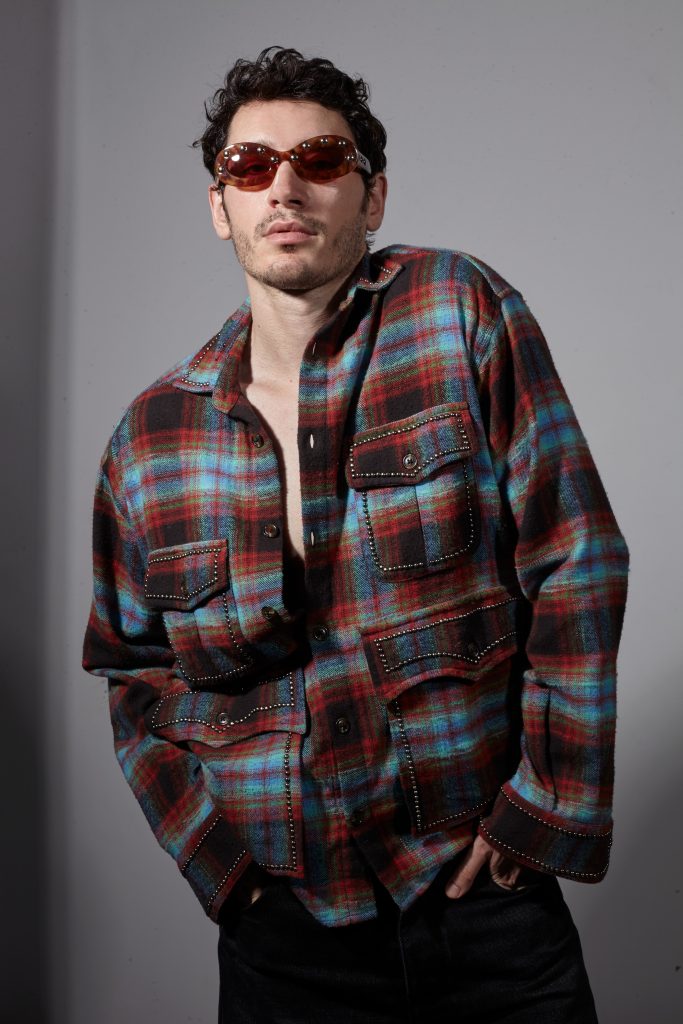
shirt BAZIST, sunglasses VALENTINO
Laith: I think I’ve felt it in small moments. And I think it comes, like you said, with experience. I want to have all the experiences. I want to feel that. We’re always chasing that dragon a little bit.
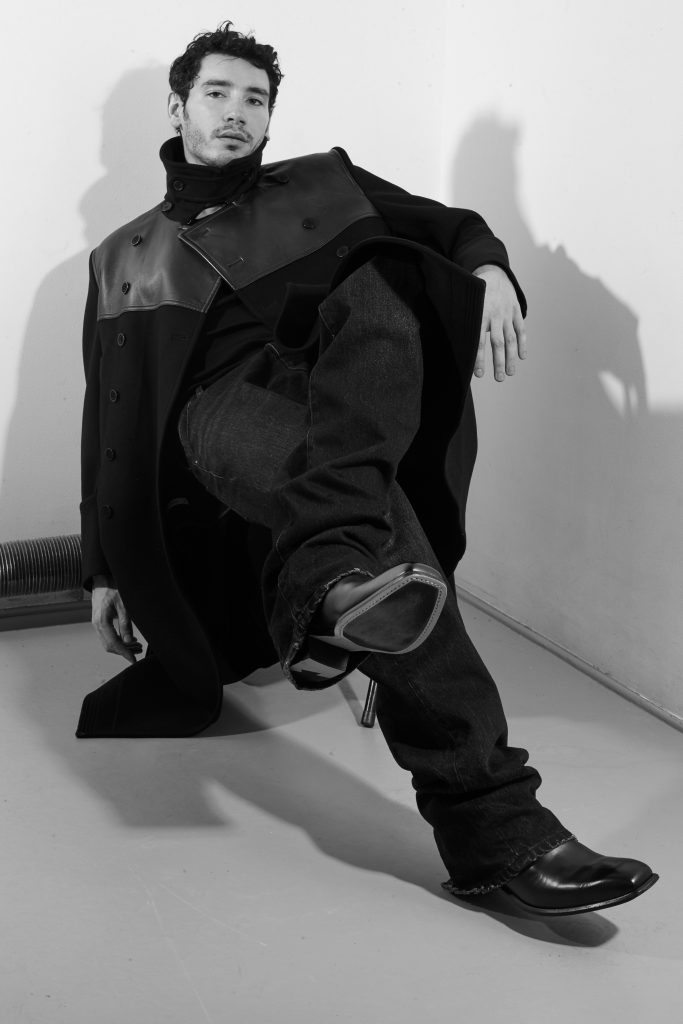
total look FENDI
Murray: And the irony is that if you’re chasing the dragon, you’ll never catch it, because then you’re engaged in a chase rather than being in the moment. You can’t set out to say, okay, in this job I’m going to feel the magic.
Laith: Oh definitely.
Murray: That’s another reason I relate to Ellen Burstyn. She does a lot of preparation. Technically, she’s a method actor, although she doesn’t do it in a way that affects anyone around her. It’s all hidden. I don’t know about you, but I love preparing. I love researching, thinking of different ways a scene might go, finding the hidden things, finding music or art, or being inspired by other films with similar scenes. All of that is a support structure so that hopefully I can let go, be fully present, and have some of that magic happen. For me, it’s been years of confidence building, or more like faith building, that those moments are available to all of us if we trust and go with it. You do whatever prep you do, then bring it back to basics: look in the other person’s eyes and really listen.
Laith: I couldn’t agree more.
Murray: Really listen. Get out of your own way. I’ve had those moments appear more consistently as I’ve gotten older. More perspective, probably more confidence, and more faith. What have you got to lose, really?
Laith: How do you think that’s developed as you’ve gotten further in your career? I’m very curious because, I mean, comparatively, you have so much more experience than me, so I’m wondering what that confidence development looks like. When did it show up for you? I’ve noticed some pretty intense imposter syndrome in myself. I think it’s partly because I care a lot, but I prepare, I feel like I’ve done sufficient work before getting there, and I feel con dent in what I’ve done after it’s all said and done, but then all of a sudden I’m thinking everyone hates me. Does the vulnerability of performance just inherently come with that territory? How do you deal with that?
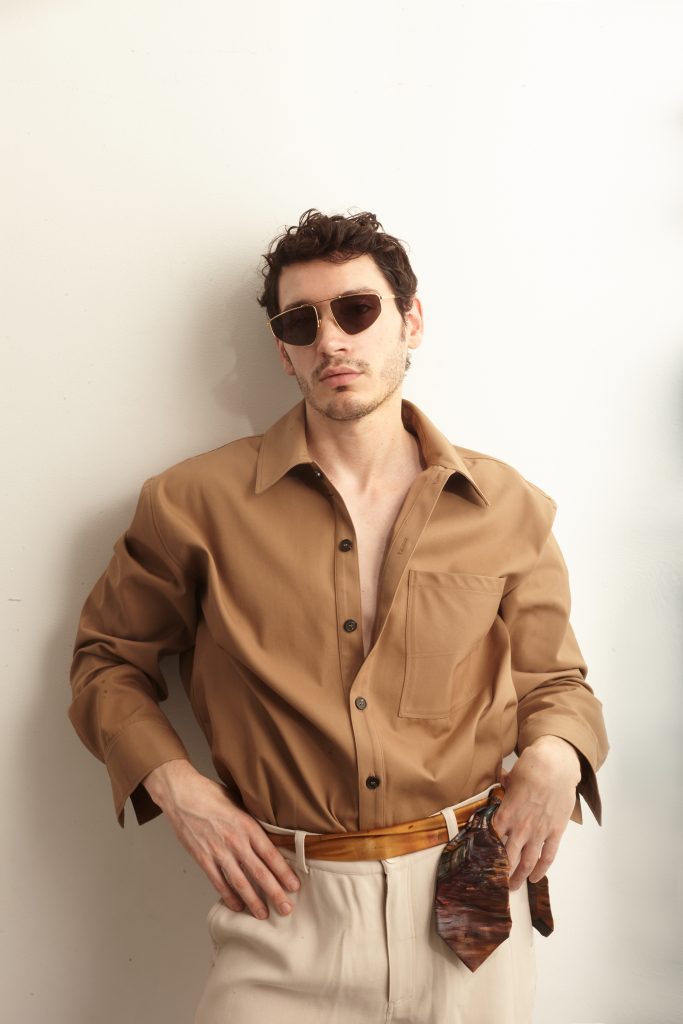
shirt and shorts LOUIS GABRIEL NOUCHI, tie LANVIN, sunglasses BOTTEGA VENETA
Murray: I was terrified throughout my 20s, and so frustrated by it. Similarly, I would prepare so much, because I figured if I was prepared, at least I’d feel con dent I was bringing something. But I’d get paralyzed by nerves, not always, but most of the time. It was so frustrating because I felt I had something to offer and couldn’t access it, because there was this layer of fear and imposter syndrome over the top. But finding situations where I could feel really in my body and able to access what I wanted to offer as an actor was what helped. Once you’ve got a reference point, you can work with it. And if you talk to any older actor, it never goes away. But you find a way to navigate it better. You also get older and think, what have I got to lose? So I make a fool of myself, okay.
Laith: That’s great. I guess it’s the idea of daring to fail a little, to play a little, without it crushing you. To have that so-called failure feel like a step towards something truer. I think that’s what I like most about acting. It feels like a hug, but it also somehow simultaneously feels like being directly in the crosshairs. How something can feel sort of dangerous and exhilarating and undiscovered, but also like a window into yourself. Like you know yourself a little better every time. I really crave that.